

A former British Home Secretary, Suella Braverman, has sparked outrage after suggesting that Ghana and other former British colonies owe the United Kingdom financial compensation for its colonial-era contributions.
The shocking claim has drawn sharp criticism from across the globe, with many arguing that it is a gross distortion of historical facts.
In a post on X, Braverman rejected the notion that present-day British taxpayers should bear any financial responsibility for actions carried out centuries earlier. She argued that if reparations were ever to be considered by the UK government, the direction of payment should be inverted.
This means that former British colonies, including Ghana, would be expected to compensate the UK for its colonial-era contributions.
This stance has been met with widespread criticism, with many pointing out that colonial systems were fundamentally extractive in nature, designed to funnel resources and wealth out of occupied territories and into Britain.
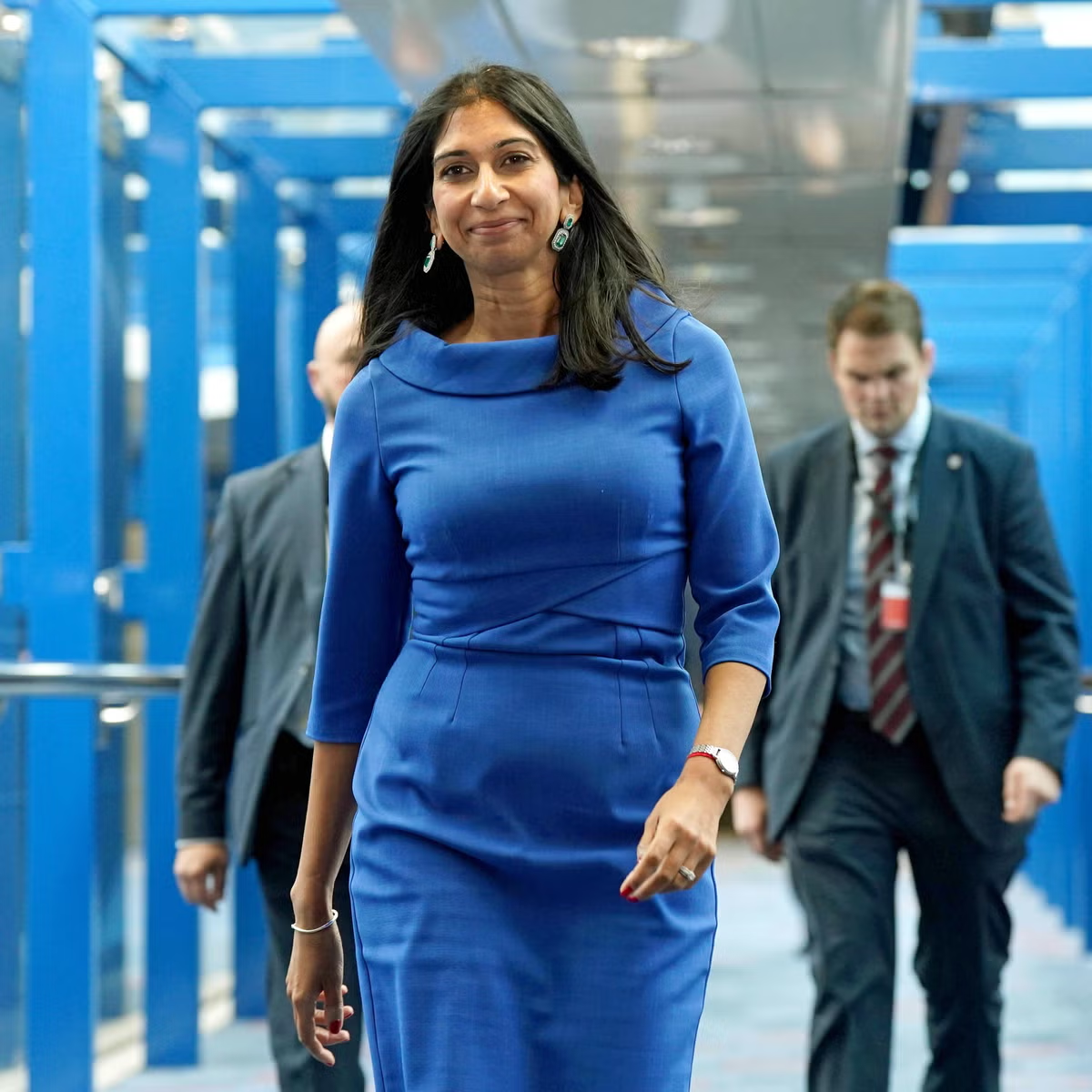

Critics of Braverman’s comments argue that her framing of empire as an act of generosity ignores the well-documented exploitation of land, labour, and natural resources that defined British colonial rule across Africa, the Caribbean, and beyond.
They argue that it is outrageous to suggest that former British colonies owe the UK financial compensation for its colonial-era actions. This criticism is not new, as several Caribbean nations have formally pursued reparations, and African governments have increasingly been vocal about seeking redress for the legacies of slavery and colonialism.
It is worth noting that Ghana has taken steps to address the legacies of colonialism. Recently, the country secured commitments from the Netherlands, Germany, Denmark, and France to return looted cultural artefacts following the Next Steps Reparatory Justice Conference in Accra. The Dutch government catalogued 2,000 artefacts and made a symbolic presentation to President John Dramani Mahama at the conference. Denmark pledged to help preserve Ghana’s historic slave forts, while France committed to establishing a commission to trace African artefacts held abroad.
The controversy surrounding Braverman’s comments is likely to fuel further debate on both sides of the argument. As the world grapples with the legacies of colonialism, it is essential to have an honest and nuanced conversation about the impact of colonialism on former British colonies. The reaction to Braverman’s comments serves as a reminder that the issue of reparations and colonialism remains a pressing concern for many nations, including Ghana.
In the coming days, it will be interesting to see how the UK government responds to Braverman’s comments. Will they distance themselves from her stance, or will they continue to push for the idea that former British colonies owe the UK financial compensation for its colonial-era actions? One thing is certain – the debate on colonialism and reparations is far from over, and it will be crucial to have a nuanced and informed conversation about this complex issue.
See Suella Braverman tweet below;
Peole reacts to her post
Attracting Wealth said

Clearly an ignorant statement from someone who has no awareness of slavery or the participants and the effects of 400 years of a crime against humanity. Demonstrate the basis in law to compensate slave owners and investors up to 2015? What would be her view of the holocaust?
Freedom Has Cast also said;
Clearly an ignorant statement from someone who has no awareness of slavery or the participants and the effects of 400 years of a crime against humanity. Demonstrate the basis in law to compensate slave owners and investors up to 2015? What would be her view of the holocaust?
Tsukikage Saito said
What a bullshit sentence from politicians. You’re ancestors will shame because of you in after life . Look at other countries like burma still struggling with civil war because of colonies. You are really nut
Deshibhakt said
In which case show on factual basis what part of these investments did not contribute to exploiting the resources of former colonies. Otherwise, forget reparations for plunder, if you have to pay million each to the half million the UK directly murdered, that’s 500 million GBP.
RELATED

More About This Person

PIN Codes for 121,754 Graduates Released by NSA Ahead of National Service Year

Survey Reveals Majority of Ghanaians Satisfied with Mahama’s Performance

Government Clears Billions in Arrears for Road Contractors

Constitutional Referendum Set for 2027 District Assembly Polls

New Era at the Helm: Kenneth Gilbert Adjei Appointed Defence Minister


